

Connected Aircraft Market to Reach US$ 25.84 Billion by 2035 Driven by Digital Aviation Connectivity
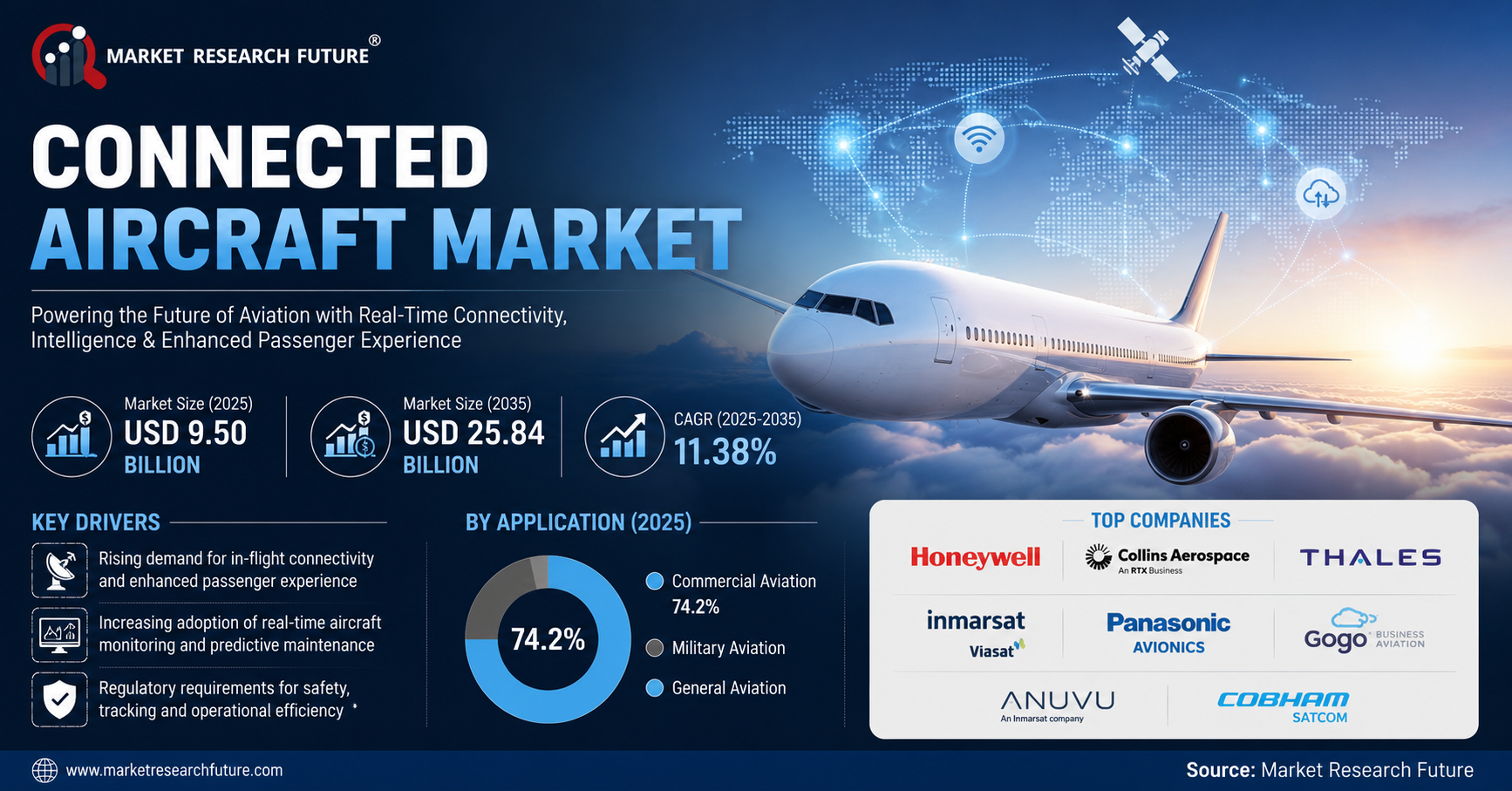
Connected Aircraft Market
Connected aircraft technologies enable seamless communication between aircraft systems, ground stations, airlines, maintenance teams, and passengers. These systems facilitate continuous data exchange throughout the flight lifecycle, helping operators optimize routes, reduce fuel consumption, improve maintenance planning, and enhance overall fleet performance.
Market Overview:
The aviation industry is undergoing a significant digital transformation, with connectivity becoming a critical component of modern aircraft operations. Airlines are increasingly investing in connected aircraft solutions to improve passenger satisfaction through high-speed in-flight connectivity while simultaneously leveraging operational data to enhance efficiency and reduce costs.
The implementation of real-time aircraft data transmission systems allows operators to monitor aircraft health, engine performance, weather conditions, and flight operations continuously. Furthermore, advancements in satellite communication technologies and the deployment of multi-orbit satellite networks are enabling more reliable and cost-effective connectivity solutions across global airspace.
The market's growth is further supported by regulatory initiatives emphasizing aircraft tracking, safety monitoring, and operational transparency. The increasing focus on predictive maintenance and data-driven decision-making is also contributing to widespread adoption across commercial, military, and general aviation sectors.
Request Sample PDF of Report: https://www.marketresearchfuture.com/sample_request/6039
Latest Trends in the Connected Aircraft Market:
1. Expansion of Multi-Orbit Satellite Connectivity Networks
One of the most significant trends shaping the connected aircraft industry is the deployment of multi-orbit satellite architectures. Airlines and aviation service providers are increasingly utilizing integrated Low Earth Orbit (LEO), Medium Earth Orbit (MEO), and Geostationary Orbit (GEO) satellite networks to deliver uninterrupted connectivity services.
These advanced satellite ecosystems provide higher bandwidth, lower latency, and improved global coverage, enabling airlines to offer enhanced passenger internet services and more efficient operational communications.
2. Growing Adoption of Predictive Maintenance Platforms
Predictive maintenance has emerged as a transformative trend within the aviation industry. Connected aircraft continuously generate operational data that can be analyzed using advanced analytics and artificial intelligence technologies.
By identifying potential equipment failures before they occur, airlines can reduce unscheduled maintenance events, minimize aircraft downtime, and improve fleet availability. This proactive maintenance approach is becoming a key investment area for airline operators worldwide.
3. Rising Demand for Enhanced Passenger Connectivity
Passenger expectations regarding onboard connectivity have evolved significantly. Travelers increasingly expect seamless internet access, entertainment streaming, communication services, and digital engagement during flights.
As a result, airlines are upgrading their connectivity infrastructure and deploying advanced broadband technologies to deliver superior in-flight experiences. Enhanced passenger connectivity is becoming a major differentiating factor among airline operators.
4. Integration of Aircraft IoT Systems
The aviation sector is embracing Internet of Things (IoT) technologies to facilitate real-time monitoring of aircraft systems and components. IoT-enabled sensors generate valuable operational data that supports maintenance planning, fuel optimization, and performance monitoring. The increasing deployment of aircraft IoT ecosystems is strengthening the value proposition of connected aircraft solutions across the aviation industry.
5. Increasing Focus on Digital Flight Operations
Airlines are increasingly adopting digital flight operation platforms that integrate flight planning, weather intelligence, navigation support, and operational analytics. These systems rely heavily on continuous aircraft connectivity to deliver actionable insights and improve operational decision-making.
Market Drivers:
1. Regulatory Requirements for Aircraft Tracking and Safety
The implementation of global aviation safety regulations requiring enhanced aircraft tracking and communication capabilities is a major market driver. Regulatory authorities are encouraging the adoption of systems that provide continuous aircraft visibility and real-time operational data transmission. These initiatives are accelerating investments in advanced connectivity technologies across commercial aviation fleets worldwide.
2. Increasing Airline Investments in Digital Transformation
Airlines are actively pursuing digital transformation strategies to improve operational efficiency and reduce costs. Connected aircraft solutions enable real-time monitoring, data-driven decision-making, and enhanced resource utilization. As airlines modernize their fleets and operational infrastructures, demand for connected aviation technologies continues to rise significantly.
3. Growing Need for Operational Efficiency
Airline operators face constant pressure to improve efficiency while controlling operational expenses. Connected aircraft systems provide actionable insights that support route optimization, fuel management, predictive maintenance, and improved asset utilization. The ability to achieve measurable cost savings is encouraging greater adoption of connected aircraft technologies across the industry.
4. Rapid Growth in Air Passenger Traffic
The steady expansion of global air travel is driving demand for enhanced aviation infrastructure and passenger services. Airlines are investing in connectivity solutions to accommodate increasing passenger expectations and support growing fleet operations. The expansion of airline fleets, particularly in emerging markets, is creating additional opportunities for connected aircraft solution providers.
5. Defense Sector Modernization Programs
Military organizations are increasingly deploying connected aircraft systems to enhance situational awareness, mission coordination, and secure communications. Advanced connectivity capabilities support network-centric warfare strategies and improve operational effectiveness. Ongoing defense modernization initiatives are contributing significantly to market growth.
Market Opportunities:
1. Expansion Across Emerging Aviation Markets
Rapid aviation growth in countries across Asia-Pacific, the Middle East, and Latin America presents substantial opportunities for connected aircraft solution providers. Fleet expansion programs and airport modernization initiatives are creating favorable conditions for market penetration.
2. Growth of High-Throughput Satellite Technologies
The continued development of high-throughput satellites is enabling faster and more affordable aviation connectivity services. These advancements are expected to unlock new applications and business models within the connected aircraft ecosystem.
3. Artificial Intelligence and Advanced Analytics Integration
The integration of AI-driven analytics with aircraft connectivity platforms presents significant opportunities for predictive maintenance, operational optimization, and enhanced passenger personalization. As airlines increasingly rely on data-driven strategies, demand for advanced connected aircraft analytics solutions is expected to rise substantially.
4. Increasing Adoption in General Aviation
General aviation operators are increasingly investing in connectivity upgrades to improve operational efficiency and passenger experiences. Business jet operators, in particular, are seeking advanced connectivity capabilities comparable to those available in commercial aviation. This growing demand is expected to support strong market growth throughout the forecast period.
Segment Analysis:
1. By Offering
Services - The Services segment accounted for the largest market share of approximately 54.5% in 2025. The dominance of this segment reflects increasing demand for managed connectivity services, network management, maintenance support, and passenger connectivity solutions. Airlines are increasingly outsourcing connectivity management to specialized service providers to ensure reliable performance and optimize operational efficiency.
Solutions - The Solutions segment is expected to witness robust growth during the forecast period. The increasing integration of embedded connectivity systems, aircraft monitoring platforms, and data management solutions is driving demand within this segment. Aircraft manufacturers are incorporating advanced connectivity capabilities directly into new-generation aircraft designs, supporting segment expansion.
2. By Connectivity Type
Inflight Connectivity - Inflight Connectivity represented the largest share of the market and generated approximately USD 6.22 billion in revenue during 2025. The segment benefits from increasing passenger demand for uninterrupted internet access, entertainment services, communication applications, and digital engagement during flights. Airlines continue to invest heavily in enhancing onboard connectivity experiences.
Air-to-Ground - The Air-to-Ground segment is projected to record a strong growth trajectory through 2035. These solutions provide cost-effective communication capabilities for regional carriers and support operational communications between aircraft and ground infrastructure. Continued technological advancements are expected to drive segment adoption.
3. By Connectivity Technology
Satellite Ku-Band - Satellite Ku-Band technology held approximately 52.6% of market revenue in 2025. The segment's leadership can be attributed to its broad coverage capabilities, established infrastructure, and cost-effective performance characteristics. Ku-Band remains widely adopted across commercial aviation applications.
Satellite Ka-Band - Satellite Ka-Band is anticipated to emerge as the fastest-growing technology segment. The technology offers significantly higher bandwidth capacity and supports data-intensive applications, making it highly attractive for modern aviation connectivity requirements.
L-Band - L-Band technology continues to play an important role in aviation communications due to its reliability and effectiveness under challenging environmental conditions. It remains a valuable component of many aviation connectivity architectures.
4. By Application
Commercial Aviation - Commercial Aviation dominated the market with a revenue share of approximately 74.2% in 2025. The segment's leadership is driven by widespread adoption of passenger connectivity solutions, operational data platforms, fleet management systems, and predictive maintenance technologies across commercial airline fleets.
Military Aviation - Military Aviation continues to represent a significant market segment as defense agencies invest in secure communication networks, real-time data sharing capabilities, and connected battlefield operations. Advanced connectivity solutions support enhanced mission effectiveness and operational coordination.
General Aviation - General Aviation is expected to register the fastest growth rate throughout the forecast period. Business jet operators and private aviation service providers are increasingly adopting advanced connectivity systems to improve passenger experiences and operational efficiency.
Regional Analysis:
North America - North America accounted for approximately 41% of the global Connected Aircraft Market in 2025, making it the largest regional market. The region benefits from strong aviation infrastructure, extensive airline modernization programs, and the presence of major connectivity technology providers.
The United States continues to lead regional growth due to substantial investments in aircraft connectivity, digital aviation technologies, and next-generation satellite communications.
Europe - Europe represents the second-largest market for connected aircraft solutions. The region's growth is supported by advanced aviation ecosystems, strong regulatory frameworks, and ongoing investments in digital air traffic management initiatives. European airlines are actively deploying connected aircraft technologies to improve operational performance and passenger services.
Asia-Pacific - Asia-Pacific is projected to register the fastest CAGR of approximately 13.05% during the forecast period. Rapid fleet expansion, growing air passenger traffic, increasing airline investments, and aviation infrastructure development across countries such as India, China, and Southeast Asian nations are driving regional growth.
Rest of the World - The Rest of the World region, including the Middle East, Africa, and Latin America, is witnessing growing adoption of connected aircraft technologies as airlines modernize operations and expand connectivity capabilities. Increasing investments in aviation infrastructure and fleet modernization programs are expected to support future market growth.
Top Company Profiles:
Honeywell Aerospace - Honeywell Aerospace is a leading provider of avionics, aircraft connectivity systems, flight management solutions, and aerospace digital technologies. The company focuses on enhancing aircraft operational efficiency through advanced communication and data management platforms.
Collins Aerospace (RTX) - Collins Aerospace delivers a comprehensive portfolio of aviation connectivity solutions, avionics systems, communication technologies, and aircraft networking platforms. The company plays a significant role in supporting connected aviation ecosystems globally.
Thales Group - Thales Group offers advanced satellite communication systems, in-flight connectivity solutions, cybersecurity technologies, and digital aviation services. The company remains a key innovator in connected aircraft infrastructure.
Inmarsat (Viasat) - Inmarsat, now part of Viasat, provides global satellite communication services that support aircraft connectivity, operational communications, and passenger broadband services across commercial and government aviation sectors.
Panasonic Avionics - Panasonic Avionics specializes in in-flight entertainment and connectivity solutions designed to enhance passenger experiences while enabling airlines to leverage data-driven operational capabilities.
Gogo Business Aviation -Gogo Business Aviation focuses on providing high-speed broadband connectivity solutions for business aviation customers. The company offers advanced communication technologies that support productivity and passenger engagement.
Anuvu (formerly Global Eagle) - Anuvu delivers mobility and connectivity solutions for aviation customers worldwide. The company provides satellite communication services and passenger engagement platforms tailored to airline requirements.
Cobham Satcom - Cobham Satcom develops satellite communication technologies and connectivity hardware that support reliable communication across commercial, military, and government aviation applications.
Recent Developments:
March 2025 – Honeywell Aerospace received certification for its JetWave Gen-3 Ka-band terminal on the Airbus A320neo platform. The upgraded terminal delivers improved real-time aircraft data transmission capabilities while reducing antenna weight by approximately 30%, supporting greater operational efficiency and enhanced connectivity performance.
January 2025 – SpaceX Starlink Aviation entered into a fleet-wide agreement with JSX Airlines to deploy Low Earth Orbit (LEO)-based in-flight Wi-Fi services across more than 100 Embraer E-jets. The partnership represents one of the largest Starlink connectivity deployments among regional airlines in the United States.
November 2024 – Inmarsat / Viasat completed the integration of GX Aviation services with ViaSat-3 satellite capacity, creating a unified Ka-band connectivity network. The expanded infrastructure now supports connectivity services for over 3,200 commercial aircraft worldwide, strengthening the global connected aircraft ecosystem.
September 2024 – Panasonic Avionics introduced its NEXT-Gen In-Flight Entertainment (IFE) platform, incorporating aircraft IoT-enabled data systems. The solution is designed to provide personalized passenger experiences at the seat level while enabling airlines to leverage advanced analytics for customer engagement and service optimization.
July 2024 – The European Union Aviation Safety Agency (EASA) released Part-IS Amendment 2, introducing stricter cybersecurity standards for connected avionics and onboard digital systems. The updated framework aims to enhance the security and resilience of connected aircraft operating within European aviation networks.
May 2024 – Gogo Business Aviation activated the first phase of its 5G air-to-ground network infrastructure across the central United States. The deployment is expected to provide business aviation operators with significantly faster in-flight connectivity, supporting peak download speeds of up to 25 Mbps.
Conclusion:
The Connected Aircraft Market is entering a transformative growth phase as connectivity evolves from a passenger convenience feature into a critical operational intelligence platform. Driven by increasing digitalization, regulatory mandates, satellite communication advancements, and growing demand for predictive maintenance capabilities, the market is expected to witness substantial expansion through 2035.
With North America maintaining market leadership, Asia-Pacific emerging as the fastest-growing region, and major industry participants continuously innovating connectivity technologies, the connected aircraft ecosystem is poised to play a central role in shaping the future of global aviation. The integration of real-time data analytics, IoT-enabled aircraft systems, and next-generation satellite networks will continue to unlock new opportunities for airlines, defense organizations, and aviation technology providers worldwide.
Browse More Reports:
Electronic Warfare Aircraft Market
https://www.marketresearchfuture.com/reports/electronic-warfare-aircraft-market-29522
Turboprop Aircraft Market
https://www.marketresearchfuture.com/reports/turboprop-aircraft-market-31791
Refueling Aircraft Market
https://www.marketresearchfuture.com/reports/refueling-aircraft-market-33467
Fighter Aircraft Market
https://www.marketresearchfuture.com/reports/fighter-aircraft-market-42460
Sagar Kadam
Market Research Future
+1 628-258-0071
sales@marketresearchfuture.com
Visit us on social media:
LinkedIn
Facebook
X
Legal Disclaimer:
EIN Presswire provides this news content "as is" without warranty of any kind. We do not accept any responsibility or liability for the accuracy, content, images, videos, licenses, completeness, legality, or reliability of the information contained in this article. If you have any complaints or copyright issues related to this article, kindly contact the author above.
